Tablet Sticking Problems? Step-by-Step Troubleshooting Guide
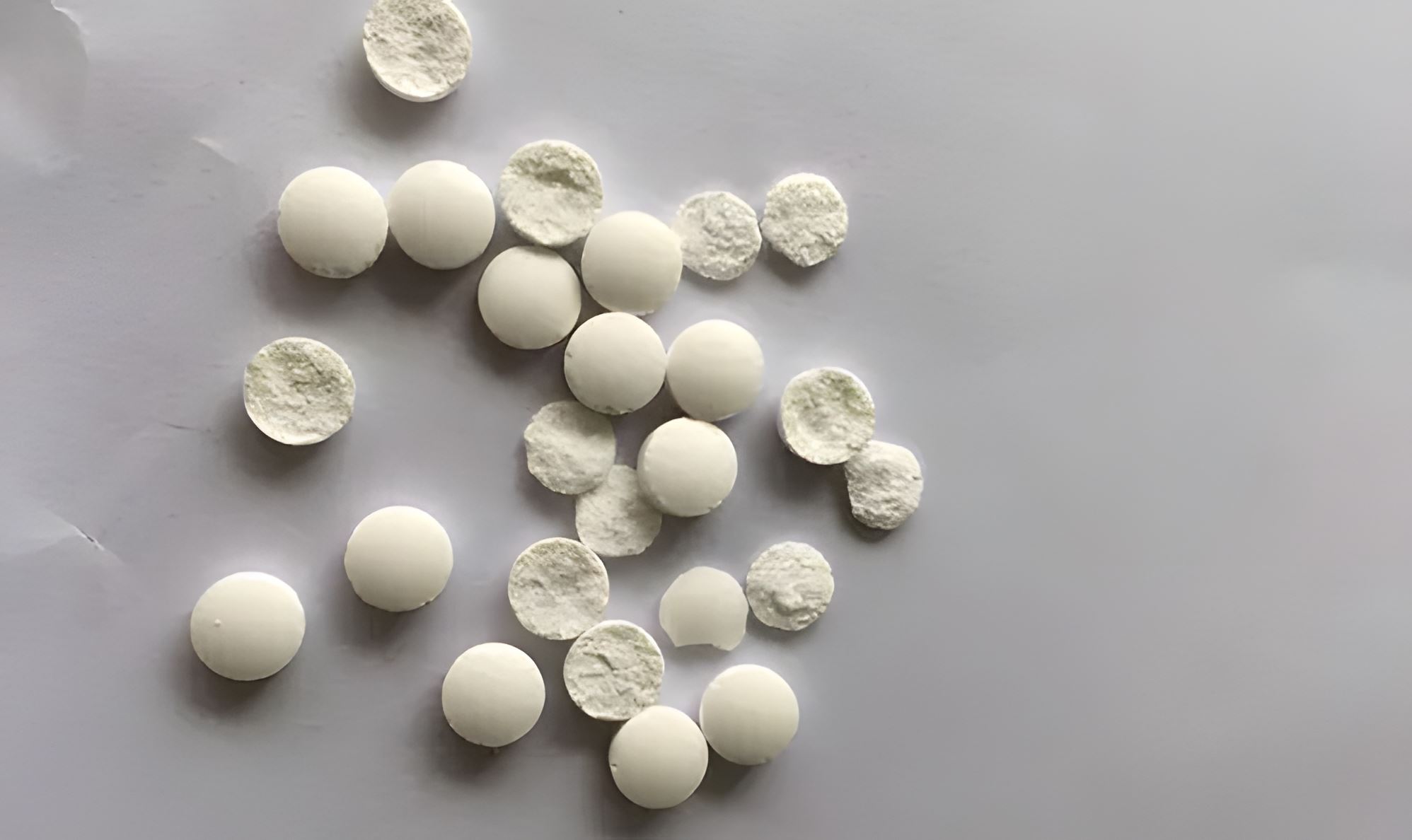
Tablet sticking (picking) refers to the issue where powder material sticks to the punch face, causing rough or pitted tablet surfaces. Here's how to prevent it effectively:
Improvement of material factors
Control the humidity of materials
Many materials have a certain degree of hygroscopicity and are prone to sticking to the punch when the ambient humidity is high or when the material itself contains too much water. For example, materials containing lactose, starch, etc., may stick to the punch during the tabletting process if their moisture content exceeds a certain limit.
1. For materials that are easy to absorb moisture, their water content should be strictly controlled. Generally, the moisture content can be controlled by drying treatment, such as drying at suitable temperature and time, such as drying the material in an oven at 50 - 60℃, to control the moisture content in a suitable range, such as 1% - 3% (the specific value varies according to different materials).
2. In terms of production environment, the relative humidity of the production workshop should be controlled. Dehumidification equipment can be installed to maintain the relative humidity of the workshop in the range of 40% - 60% to reduce the possibility of moisture absorption of materials.
Optimise the particle size and distribution of materials
The particle size and distribution of the material also have an effect on the viscous flushing. If the particle size of the material is not uniform and there are too many fines, the fines will easily fill up between the punch and the mould holes during tablet pressing, increasing the risk of sticking. For example, for some traditional Chinese medicine powders, if the powder is not properly crushed and screened, and the powder particle size varies greatly, the fine powder may adhere to the punch surface.
3. Crush and screen the material to make the particle size distribution more uniform. Usually can use multi-stage screening equipment, such as coarse sieve to remove the larger particles, and then fine sieve (such as 80 - 100 mesh sieve) to screen out the appropriate size range of materials, reduce the proportion of fine powder.
4. You can add some flow aids, such as micronised silica gel, which can improve the fluidity of the material to prevent the aggregation of fine powder, generally add 0.1% - 0.5%.
5. Adjust the material formulation of certain material components may interact with each other to cause viscous flush. For example, in some compound tablets, chemical reaction or physical adsorption may occur between drug ingredients and excipients. If the main drug is a viscous extract, mixing with certain excipients may enhance the viscosity. In this case, consideration may be given to replacing the excipients or adjusting the ratio of the main medicine to the excipients. For example, replace starch dextrin with microcrystalline cellulose, which has good compressibility and flowability and is less likely to cause viscous washout. Or increase the proportion of hydrophobic excipients, such as magnesium stearate, which can form a hydrophobic film on the surface of the granule and reduce the possibility of viscous washout, and the general addition amount is 0.3% - 1%.
Optimise tabletting equipment and process parameters
Clean and maintain punches and dies
During the tablet pressing process, materials may be left on the surface of the punches and dies. If not cleaned in time, the residual materials will gradually accumulate and increase the probability of sticky punch.
6. You can use suitable cleaning agents, such as special mould cleaner, to gently wipe the surface of the punch and mould with a soft cloth or brush to remove the residual material. At the same time, the surfaces of the punches and moulds should also be checked for any damages, such as scratches and pits, etc. These defects will make the material stick more easily. For damaged punches and dies, replace or repair them in time.
Adjust the pressure and speed of pressing film
When tablet pressure is too high, the material is squeezed too tightly, which may cause the material to spill over the edge of the die hole and adhere to the punch. For example, if the pressure is not set correctly when pressing tablets that require a high degree of hardness, sticky punches may occur. Similarly, a tablet that is pressed too fast and does not have enough time for the material to be evenly distributed in the die holes may also cause sticking.
7. Pressure and speed can be optimised by experimentation. Generally, start with lower pressure and speed, gradually increase the pressure, observe the quality of tablets, and find the optimal pressure range that can ensure the hardness and appearance of tablets are qualified, and no sticky punching occurs. The tablet pressing speed can usually be adjusted according to the nature of the material and the performance of the equipment, e.g., reducing the pressing speed from a high of 100 tablets per minute to 60 - 80 tablets per minute.
Controlling Tablet Temperature
During the tabletting process, the temperature of the tablets may increase due to friction and other factors. If the temperature is too high, the viscosity of the material may increase, resulting in sticky punching.
8. Cooling devices, such as air or water cooling systems, can be installed on the tablet press to cool the tablets during the pressing process. On the other hand, the tablet pressing process is optimised to reduce unnecessary friction, e.g. by properly lubricating the punches and die holes to reduce the heat generated by friction.
- Contact us today for more information.